Hydroseeding for New Lawns: What to Expect
A bare section around a new build can make an otherwise finished property look incomplete. Hydroseeding for new lawns is a practical way to establish broad, even grass coverage without laying turf by hand - but the result depends far more on the ground beneath it and the care that follows than on the spray itself.
For homeowners, landlords and commercial property managers across Nelson, Tasman and Marlborough, hydroseeding can be a smart fit for large areas, sloping sites and newly shaped landscapes. It is also a process with a clear responsibility split: professional preparation and application set the lawn up well; consistent watering and sensible access give it the best chance to establish.
What hydroseeding does differently
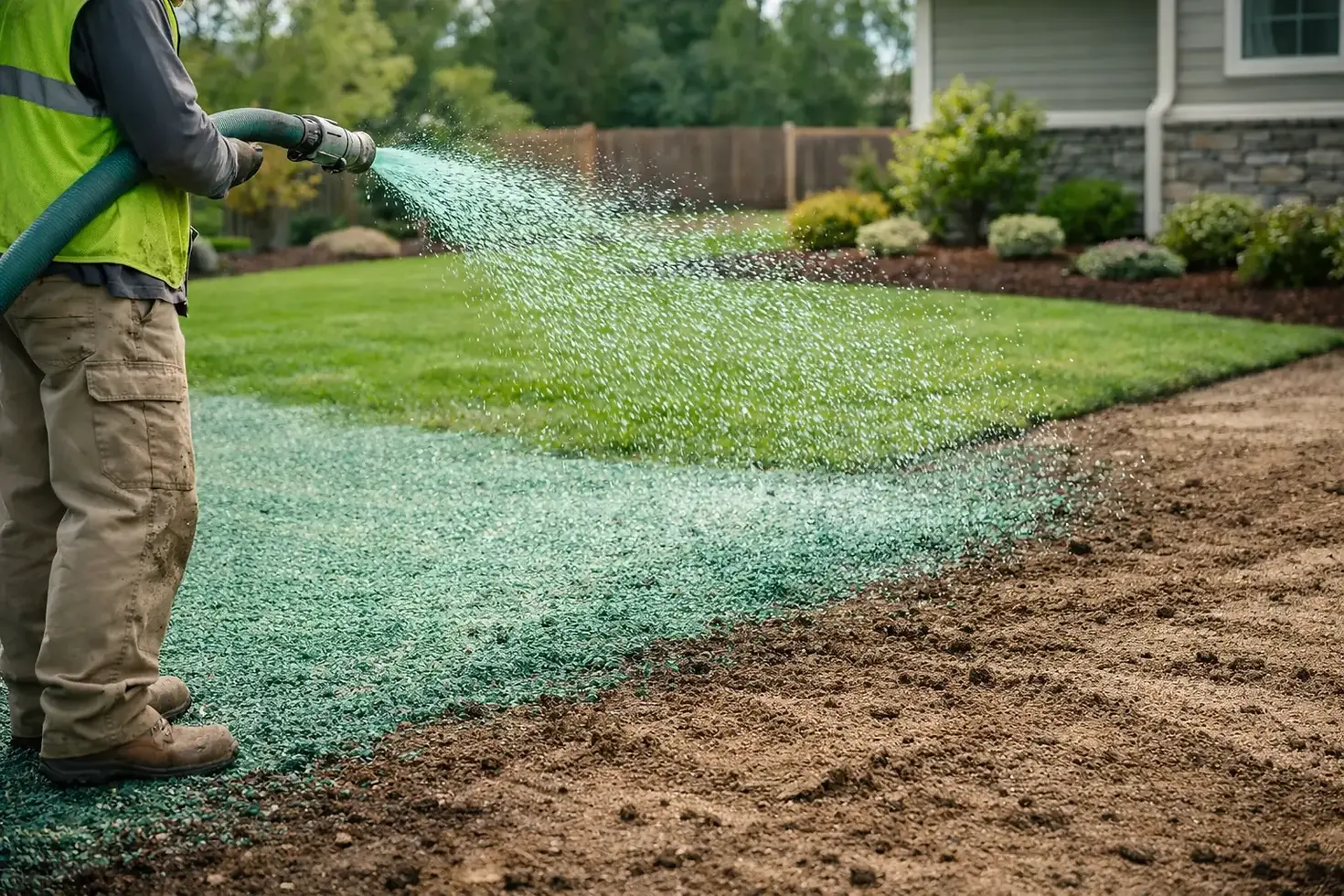
Hydroseeding applies a carefully mixed slurry of grass seed, mulch, fertiliser, water and binding agents over prepared soil. The mulch holds moisture around the seed, helps reduce erosion and makes it easier to achieve consistent coverage across uneven ground. Once applied, it forms a visible green or brown protective layer rather than an instant finished lawn.
That distinction matters. Turf provides an immediate green surface and can handle gentle use sooner, but it comes with higher material and labour costs, particularly over large areas. Hydroseeding is usually more cost-effective where there is plenty of ground to cover, awkward contours or exposed banks that need stabilising.
It is not, however, the right answer for every job. A small, highly visible entrance lawn where an immediate result is essential may suit turf better. Likewise, ground with poor drainage, deep shade or unresolved construction damage needs attention before any seed or turf goes down. No method can compensate for a poorly prepared base.
The groundwork behind a healthy new lawn
Most lawn issues seen several months after installation began before the seed was applied. Compacted subsoil, building rubble, low spots and thin topsoil all make it harder for grass roots to develop evenly. On a new-build site, this is common: machinery has travelled over the section, rain has moved soil around and trades may have left materials beneath the surface.
A proper site assessment looks at slope, drainage, sun exposure, soil condition and how the space will be used. A family lawn, a rental-property section and a commercial frontage can all need slightly different seed choices and preparation standards.
Soil levels and drainage come first
The finished surface should sit at a practical level around paths, edging, driveways and garden beds. It also needs a gentle fall away from buildings so water does not collect against foundations or create muddy patches after rain. Filling a hollow after hydroseeding is possible, but it creates a visible interruption in an otherwise even lawn.
The soil should be loosened where compaction is present, then graded and lightly firmed. It needs to be firm enough not to sink underfoot, but not so hard that roots struggle to penetrate it. Removing stones, timber offcuts and construction debris at this stage saves problems later, including damaged mower blades and bare areas where grass cannot take hold.
Topsoil quality affects the long-term result
Grass is forgiving, but it still needs enough quality soil to develop a dense root system. If the existing surface is heavily clay-based, sandy or stripped during construction, imported topsoil or soil conditioning may be worthwhile. The goal is not to create a perfectly uniform laboratory mix. It is to create a clean, workable growing layer with reasonable moisture retention and drainage.
Seed selection should also suit the property. A sunny open lawn may favour a different blend from a shaded garden, a dry exposed section or a hard-wearing communal area. Local conditions matter. Nelson and Tasman can experience dry summers and strong sun, while Marlborough properties may also face wind and very free-draining soils. Choosing a mix that matches the site is more useful than choosing one simply because it germinates quickly.
When to hydroseed a new lawn
Autumn and spring are generally the most forgiving periods for establishing a lawn. Soil is warm enough for germination, while cooler conditions reduce moisture stress. There is often more natural rainfall too, although it should support a watering plan rather than replace one.
Summer hydroseeding can work well when watering is reliable. The trade-off is that a hot, windy day can dry the mulch and young seedlings quickly, especially on exposed sites. If a client cannot keep up with regular watering, it may be better to schedule the work for a more suitable window.
Winter is more variable. Growth slows in cold, wet conditions, and persistent rain can affect a freshly prepared surface. Sheltered areas may establish steadily, while shaded or waterlogged ground can be slow to respond. Timing should follow the site, weather forecast and available aftercare rather than a fixed calendar date.
What happens after the hydroseed is applied
The first few weeks are when a new lawn earns its result. The applied mulch may look patchy in colour as it dries, and early seedlings will not appear all at once. This is normal. Germination rates vary between grass types and depend on soil temperature, moisture and exposure.
Keep foot traffic, pets, vehicles and mower access off the area as much as possible. Young roots are easily disturbed, and tyre tracks or repeated walking can compact the surface before the lawn has knitted together. If access is unavoidable, plan it before application.
Water little and often at the start
The seed zone needs to stay consistently damp while germination begins. Light, frequent watering is normally better than an occasional heavy soak, which can wash seed and mulch down slopes or create puddles. In warm or windy weather, that may mean watering more than once a day. In cooler, wetter weather, reduce it so the soil does not remain saturated.
Once seedlings are established, watering can become less frequent and deeper. This encourages roots to travel down into the soil rather than staying close to the surface. The exact schedule depends on rainfall, soil type and sun exposure, so a shaded clay area should not be treated the same as a sunny sandy bank.
First mowing requires patience
Wait until the grass has reached a mowable height and is anchored well enough that the mower will not pull seedlings from the ground. Use a sharp mower blade and remove only the top third of growth on the first cut. Cutting too low puts stress on new grass and exposes soil to drying.
Avoid mowing when the lawn is sodden. A heavy mower can leave ruts, compact the surface and tear out tender plants. Regular light mowing after establishment encourages the lawn to thicken, but there is no benefit in rushing the first cut.
Common reasons new hydroseeded lawns struggle
Uneven germination is often blamed on the seed, but the cause is commonly uneven moisture, variable soil depth or shade. A lawn next to a fence, under trees or beside a building may dry or cool differently from the rest of the section. Wind can also strip moisture from exposed ground faster than expected.
Weeds are another reality of establishing a lawn from seed. Freshly worked soil can bring dormant weed seeds to the surface. A little weed activity does not mean the lawn has failed. Once the grass is established and mowing begins, many annual weeds become less noticeable. Persistent weeds may need targeted treatment at the right stage, rather than broad spraying that risks harming young grass.
Poor drainage should be treated as a site problem, not a lawn-care problem. If water repeatedly sits in one area, more seed will not fix it. Adjusting levels, improving drainage or addressing runoff from hard surfaces is usually the more durable solution.
Is hydroseeding right for your property?
Hydroseeding is particularly useful for new sections, large residential lawns, rental-property upgrades, landscaped banks and commercial grounds where clean, consistent coverage matters. It can provide an attractive, economical result while allowing the lawn to establish naturally into its environment.
The best outcomes come from treating it as a small project rather than a single appointment: prepare the site properly, apply a suitable seed mix, protect the area, and commit to the watering and mowing schedule. Prime Service Group can coordinate hydroseeding as part of a wider landscaping or property-upkeep plan, helping reduce the handover gaps that often leave new outdoor spaces unfinished.
A good lawn does not need to appear overnight to add real value. Give the soil, seed and early care the attention they need, and a bare new section can become the tidy, usable outdoor space the property was meant to have.